The Foundations of the Green City

A renewable carbon base that strengthens urban soils, vegetation, and materials, helping green infrastructure take root and last.

We work on the city’s substructure: soils, pavements, drainage, and planting systems. We incorporate biochar into urban solutions designed to improve their stability, manage water, and reduce their environmental impact.

Key Areas and Applications

Real-World Applications

Key Areas and Applications

Biochar functions as an intermediate layer: between infrastructure and the life it supports. It is the stable carbon layer that forms the foundation for more vibrant urban soils, materials with a smaller footprint, and solutions that reduce impacts on air, water, and soil.

1. Infrastructure and Materials

A technical ingredient that replaces part of conventional materials and allows carbon to be stored in the city itself for decades. The basis for new infrastructures with a smaller footprint, without altering their functionality.

It is integrated into concrete mixes and other construction elements to replace a fraction of natural aggregates. This lightens the weight of materials and permanently sequesters carbon within buildings and infrastructures, reducing their carbon footprint without changing their use.
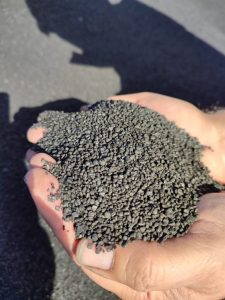
2. Urban Green Spaces and Trees

It promotes smarter root architecture: guiding roots to deeper layers, improving anchorage, and helping trees coexist better with pavements and sidewalks without damaging them. Furthermore, its high water retention capacity maximizes plant resilience and mitigates water stress.

It is incorporated into structural soils and tree pits to reduce compaction, improve aeration, and promote deeper, more stable roots. Inspired by models already implemented in pioneering cities, it helps increase the survival rate of urban trees and minimize damage to sidewalks and pavements.

3. Green Architecture and Urban Landscaping

It transforms the substrate into a lighter, more stable base for green roofs and technical planters. It is the invisible foundation of biophilic urbanism: helping greenery to cool and filter without compromising the safety of the structure.

It is mixed with the substrate of green roofs and large-volume planters to create lighter, more stable systems. It improves water and nutrient retention capacity and helps vegetation stay where it should, enabling greenery to cool and filter the city without compromising the architecture that supports it.

Application in Development

Water Management and Urban Drainage (SuDS)

In sustainable drainage and water treatment solutions, it can function as a porous filtering medium that helps retain pollutants. This is a developing field, with international reference projects, where we continue to explore how to reduce diffuse urban pollution.

It can be combined with gravel and other materials in rain gardens, drainage trenches, and sustainable urban drainage systems. Its porous structure helps filter some of the pollutants from runoff before returning the water to the environment, in a line of work that is being consolidated through specific projects and studies.

Why Carboliva

Our Foundations

Why Carboliva

Carboliva was born from decades of experience linked to olive groves and the valorisation of their biomass. Today, we combine that knowledge with research, traceability, and certification to develop biochar-based solutions for agriculture, industry, and the city.

Roots in the Olive Grove

Knowledge accumulated over generations regarding olive biomass.

Research and Development

Collaboration with universities, technology centres, and innovation projects.

Certified Quality

Collaboration with universities, technology centres, and innovation projects.

Guaranteed Traceability

Biochar certified according to the European EBC standard.

Tests and Projects
Clients
They have already tried our biochar